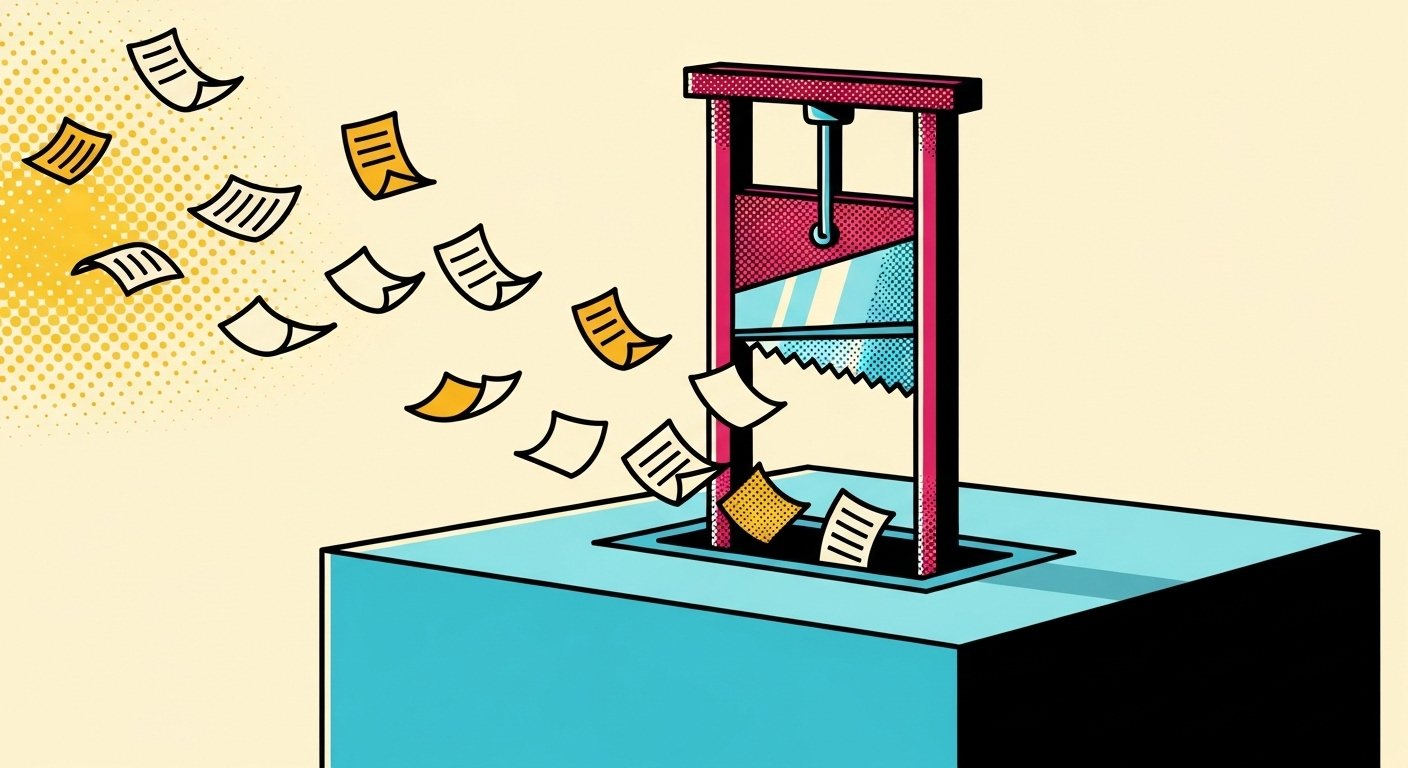
If your organisation has migrated to an expensive Human Capital Management (HCM) platform with continuous feedback features, but operates a culture where speaking up leads to retaliation, the technology is not your problem. The platform is functioning exactly as advertised. The culture is functioning exactly as it was built. These two things are simply incompatible, and no amount of system configuration will resolve that.
This is one of the most expensive mistakes in enterprise HR technology — and one of the least discussed. Let's talk about it properly.
What is a continuous feedback HCM platform, and why do organisations buy one?
An HCM platform (Human Capital Management platform) is an integrated software suite that manages the employee lifecycle — from recruitment and onboarding through performance management, learning, payroll, and eventually offboarding. Major vendors in this space include SAP SuccessFactors, Workday, Oracle HCM Cloud, and Microsoft Viva, among others.
Continuous feedback is a feature set within these platforms that replaces or supplements the annual performance review with real-time, ongoing feedback loops — peer-to-peer, manager-to-employee, and upward feedback. The theory is sound: timely feedback is more useful than feedback delivered eleven months after the event it concerns.
Organisations buy these platforms for a range of reasons, including:
- Replacing legacy HR systems that are held together by spreadsheets and institutional memory
- Consolidating fragmented HR processes into a single source of truth
- Meeting board-level commitments around employee engagement and culture
- Genuine belief that better tooling will enable better conversations
- A vendor demo that looked very compelling in a conference room
That last one is more common than anyone admits in post-implementation reviews.
What actually goes wrong when you deploy feedback tools into a retaliatory culture?
The short answer: nothing goes wrong with the technology. The platform works. Notifications fire. Dashboards populate. Reports get generated. The problem is that the human system it sits on top of has spent years teaching people that honesty is professionally dangerous.
In a culture where speaking up results in retaliation — whether that's being sidelined, managed out, publicly undermined, or simply frozen out of opportunities — employees learn to survive. They become very good at saying the right thing in the right forum to the right person. They do not need a new platform to do this. They will simply do it on the new platform instead.
What does this actually look like in practice?
I've seen this pattern repeatedly across large-scale transformation programmes. Here is how it typically plays out:
- Feedback scores cluster suspiciously high. Everyone rates everyone as excellent because the alternative is awkward at best and career-limiting at worst.
- Upward feedback is strategically vague. Comments like "great leadership" and "very supportive" appear in bulk. Nothing actionable. Nothing honest.
- The platform's anonymity features are not trusted. Employees are correct to be sceptical — in small teams, writing style, context, and timing make "anonymous" feedback traceable more often than vendors suggest.
- Managers use the tool to document cases, not develop people. In punitive cultures, performance tools get weaponised. The continuous feedback feature becomes a paper trail.
- Adoption drops off after the initial mandate. People fill in what they must, say what is safe, and revert to informal networks for anything real.
The platform, in this scenario, has successfully digitised the performance of a healthy culture without producing one. Which is, in fairness, exactly what was asked of it.
Why does this keep happening? Isn't this obvious before you spend the money?
It should be. It frequently isn't — or rather, it is obvious to many people in the organisation who have learned not to say so.
There is a particular irony in the fact that the cultural dysfunction which will undermine your feedback platform is often invisible to the people commissioning it, because those people are the reason the dysfunction exists. Senior leaders in retaliatory cultures rarely experience retaliation. They experience deference, which feels like psychological safety if you're not paying close attention.
According to Gallup's State of the Global Workplace report, only 23% of employees worldwide are engaged at work, and one of the top drivers of disengagement is the feeling that their opinions don't count. Buying a platform that asks for opinions does not address that driver. It just makes the gap more measurable.
A 2023 study by Gartner found that 82% of employees say their manager doesn't consistently demonstrate the behaviours expected of them around psychological safety. You cannot solve an 82% behavioural problem with a software licence.
Is the HCM migration itself a waste of money in this situation?
Not necessarily — but the continuous feedback features are, until the culture changes.
There is a meaningful distinction between the core HCM infrastructure (payroll, compliance, workforce planning, learning management) and the culture-dependent features layered on top. The former has clear ROI regardless of cultural health. The latter requires psychological safety as a prerequisite, not as an outcome.
The mistake is treating them as a package deal. Vendors will not make this distinction clearly for you, because selling you the full suite is in their commercial interest. The demo will show happy employees enthusiastically leaving each other constructive feedback. This is aspirational fiction, and everyone in the room knows it on some level.
How do you diagnose whether your culture can actually support continuous feedback?
Before deploying — or before writing off the deployment as failed — it is worth conducting an honest cultural assessment. Not a survey administered through the platform you're trying to assess.
Key diagnostic questions to ask
- Can you name three specific instances in the last year where an employee raised a concern upward and experienced a positive outcome as a result?
- When someone gives critical feedback to a senior leader, what typically happens to that person over the following six months?
- Do your managers discuss their own development areas openly with their teams?
- Has anyone in your organisation been visibly rewarded for flagging a problem early — not just thanked, but actually rewarded?
- What is your attrition rate among high performers, and do you know why they leave?
If answering these questions produces discomfort, long pauses, or a request to take this offline, you have your answer about cultural readiness.
What should you actually do? A practical sequence
This is not a problem you can technology your way out of. But it is also not hopeless. Here is a realistic sequence of actions — realistic being the operative word.
Step 1: Acknowledge the gap between the platform's design intent and your current culture
This requires someone senior enough to say it without being managed out for doing so. If no one in your organisation meets that description, you have a more fundamental problem than your HCM configuration.
Step 2: Suspend or deprioritise the continuous feedback features
This is not failure. This is triage. Deploying feedback tools into a retaliatory culture actively makes things worse — it teaches employees that the organisation considers the performance of engagement sufficient, and that their actual experience is irrelevant.
Step 3: Invest in psychological safety as a precondition, not a byproduct
Amy Edmondson's research on psychological safety (the belief that one can speak up without fear of punishment or humiliation) is the foundational framework here. Her work at Harvard Business School, particularly as documented in The Fearless Organisation (2018), is the most rigorously evidenced starting point for this work.
This is not a training course. It is a sustained behavioural change programme, and it starts with leaders demonstrating vulnerability before asking employees to do so.
Step 4: Pilot feedback in a genuinely safe context first
Find a team or function where the manager is trusted, tenure is stable, and there is evidence of open communication. Run the feedback features there. Build a case study. Let it spread by reputation rather than mandate.
Step 5: Revisit the platform configuration with your new cultural baseline
Most HCM platforms allow significant configuration of how feedback is requested, displayed, and used. Work with your vendor and your HR team to configure the tool for your actual culture, not the aspirational one in the product brochure.
Step 6: Address retaliation directly and visibly
If specific managers or leaders are known to retaliate against those who give honest feedback, this must be addressed directly — not through a culture programme running in parallel, but through consequence. Nothing communicates organisational values more clearly than what happens to people who violate them.
How does this compare to other common HCM deployment failures?
| Failure Mode | Root Cause | Technology's Role | Fixable Without Culture Change? |
|---|---|---|---|
| Low adoption of continuous feedback features | Retaliatory culture; distrust of anonymity | Neutral — platform works as designed | No |
| Inflated feedback scores across the board | Social pressure; fear of consequences | Neutral — data reflects real behaviour | No |
| Tool used for performance management of dissenters | Management weaponising HR systems | Enabling — platform makes documentation easier | Partially (configuration helps; culture is the fix) |
| High cost, low ROI on people features | Mismatch between tool capability and cultural readiness | Contributory — over-sold in procurement | Partially (descope features until culture is ready) |
| Poor data quality in performance records | Employees gaming inputs to manage outcomes | Neutral — garbage in, garbage out | No |
| Technical integration failures | Legacy system complexity; data mapping errors | Causal — genuine technical problem | Yes — this one actually is a tech problem |
Notice that only one failure mode in that table is actually a technology problem. The rest are culture wearing a technology costume.
What does good look like? Can this actually be fixed?
Yes. But not quickly, and not cheaply, and not by the same people who created the problem without changing something about how they operate.
I've worked with organisations that have genuinely turned this around — where a significant cultural shift preceded meaningful use of feedback tooling, and where the platform eventually did what it said on the tin. The common factors were:
- A senior leader who modelled vulnerability publicly and consistently, over a long period
- Visible consequences for retaliatory behaviour at management level
- A willingness to hear genuinely uncomfortable things and respond constructively, repeatedly, until people believed it
- A realistic timeline — typically 18 to 36 months before trust was sufficient to generate honest feedback at scale
None of those factors appear in a vendor's implementation roadmap. They require a different kind of investment entirely.
A note on vendor responsibility
The major HCM vendors are not naive about this problem. Their professional services teams have seen it dozens of times. The better ones will raise cultural readiness in the discovery phase. The less scrupulous ones will take your money and configure your platform and write a glowing case study about the deployment, carefully omitting the adoption data.
When evaluating HCM vendors — or reviewing an existing contract — ask specifically: what is your change management methodology for organisations where psychological safety scores are low? If they pivot immediately to a training module or a pulse survey tool, ask the question again.
Frequently Asked Questions
Can anonymity settings in HCM platforms genuinely protect employees who give honest feedback?
Partially, and with significant caveats. Most platforms offer anonymity thresholds — feedback is only displayed when a minimum number of responses have been received. However, in small teams, this is easily circumvented by managers who can narrow down respondents by context or timing. Anonymity is a feature, not a guarantee, and employees in retaliatory cultures are right to treat it with scepticism.
Should we pause our HCM migration if we identify cultural problems mid-implementation?
Not necessarily pause the whole migration — but you should absolutely descope the continuous feedback features until cultural conditions support them. Core HCM infrastructure (payroll, compliance, workforce planning) should proceed. Culture-dependent features should be parked in a backlog with clear prerequisites for activation.
How do we measure psychological safety before deploying feedback tools?
Amy Edmondson's 7-item psychological safety scale is the most widely validated instrument for this. It should be administered independently — not through the HCM platform — and ideally by an external facilitator. The results should be treated as diagnostic, not promotional.
What is the average cost of an enterprise HCM platform migration?
Highly variable, but for large organisations (1,000+ employees), total cost of ownership including licences, implementation, integration, and change management typically ranges from £500,000 to several million pounds over a three-to-five year period. Gartner's research consistently finds that organisations underestimate implementation costs by 40–60% at the point of procurement.
Is continuous feedback even a good idea, or is it just a trend?
The underlying principle — that timely, specific feedback is more useful than annual reviews — is well-supported by research in organisational psychology. The problem is not the concept. The problem is that it requires a degree of interpersonal trust and psychological safety that most organisations have not built. The idea is sound. The conditions required to make it work are rare.
What should we do if the retaliation is coming from the C-suite?
This is the hardest version of the problem, and the most common. If the behaviour driving the cultural dysfunction originates at executive level, internal change programmes are largely ineffective. The levers are typically external: board intervention, significant attrition of talent, regulatory scrutiny, or a change in leadership. Technology cannot solve a governance problem. That is not a comfortable answer, but it is the accurate one.
How do we get value from our HCM investment in the meantime?
Focus on the features that do not require psychological safety to deliver value: workforce analytics, compliance management, learning and development tracking, payroll accuracy, and onboarding automation. These generate measurable ROI regardless of cultural health and build organisational familiarity with the platform while the cultural work proceeds in parallel.
Nicholas Hodder is a digital transformation and technology leader with over 20 years of experience across public sector, commercial, and third sector organisations. He has led and advised on major HCM and enterprise platform implementations, and has learned — sometimes expensively — that the hardest problems in technology are rarely technical. He also performs stand-up comedy, which turns out to be excellent preparation for delivering difficult truths to rooms full of people who did not entirely ask for them.