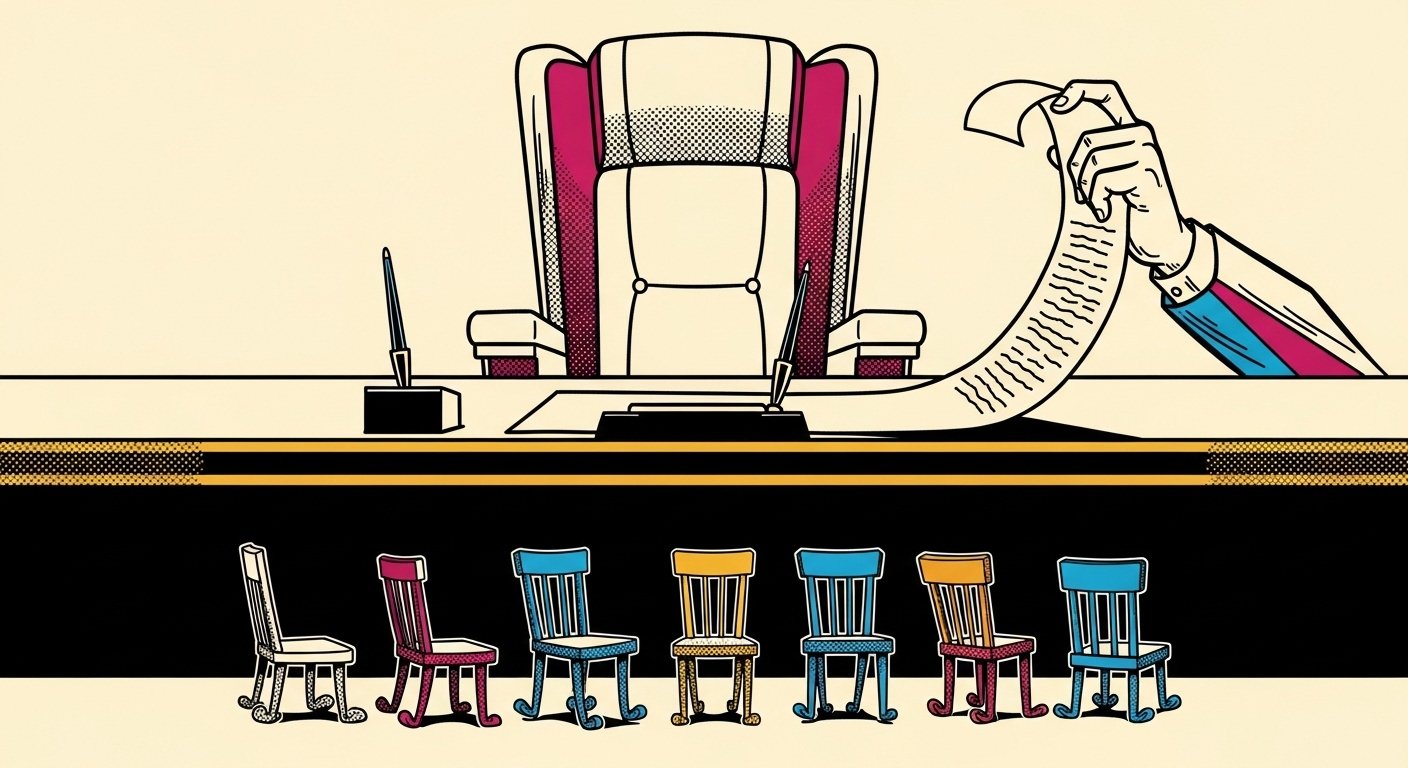
If your daily stand-up has turned into a two-hour inquisition where a senior stakeholder works their way down a list of names demanding updates, you don't have an agile ceremony — you have a performance review with worse chairs. This is one of the most common and most damaging anti-patterns in digital delivery, and it tends to happen not because people are malicious, but because nobody has been honest enough to name what's actually going on.
This article is that conversation. We'll diagnose why it happens, what it costs, and how to fix it — or at the very least, how to stop pretending it's something it isn't.
What Is a Daily Stand-Up Actually Supposed to Be?
The daily stand-up (also called a daily scrum in Scrum methodology) is a short, time-boxed team synchronisation ceremony. The Scrum Guide — the closest thing agile has to a constitution — prescribes a maximum of 15 minutes. Its purpose is to help the development team coordinate work, surface blockers, and make a plan for the next 24 hours.
It is explicitly not a status report for management. The Scrum Guide states this plainly: "The Daily Scrum is not the only time Developers are allowed to adjust their plan. They often meet throughout the day for more detailed discussions about adapting or re-planning the rest of the Sprint's work."
The three classic questions — What did I do yesterday? What will I do today? What's blocking me? — exist to serve the team. They are not a mechanism for a delivery manager to tick boxes on a RAG (Red, Amber, Green) status spreadsheet while standing up to give the impression of urgency.
So Why Does the Two-Hour Aggressive Status Report Exist?
This is the more interesting question. Nobody sets out to design a meeting that demoralises their team, burns two hours of productive engineering time daily, and produces exactly zero useful information that couldn't have been surfaced in a five-minute async message. And yet here we are.
Is it a trust problem disguised as a process problem?
Almost always, yes. The aggressive status report meeting is a symptom of low organisational trust — specifically, a senior stakeholder or manager who doesn't believe the team will surface problems without being directly interrogated. That distrust might be earned (the team has historically hidden bad news) or unearned (the manager simply hasn't worked in a psychologically safe environment). Either way, the meeting is the wrong solution.
Research from Google's Project Aristotle found that psychological safety — the belief that you won't be punished for speaking up — was the single strongest predictor of high-performing teams. A meeting format that functions as an interrogation actively destroys the conditions under which people raise blockers early.
Is it a governance structure that's been bolted onto agile?
Frequently. I've seen organisations adopt agile delivery methods while keeping intact a waterfall-era governance layer that demands weekly written status reports, monthly steering committee updates, and daily verbal confirmation that everything is on track. The stand-up becomes the vehicle for all of that reporting, because someone realised it was the one meeting that happened every day.
The result is a ceremony that serves upward reporting rather than team coordination. It's the agile equivalent of installing a self-checkout machine and then stationing a member of staff next to it to do everything manually anyway.
Does the meeting length itself signal something?
Yes. Two hours is not an accident. It usually means one of three things:
- The team is too large to be a single sprint team (Scrum recommends 3–9 people per team)
- The facilitator is using the meeting to resolve problems rather than surface them
- The meeting has accumulated additional agenda items over time that nobody has had the authority or courage to remove
A stand-up that runs for two hours is not a stand-up. It's a sit-down with the chairs removed.
What Does This Kind of Meeting Actually Cost?
Let's be concrete, because organisations rarely do this calculation. According to a study by Atlassian, the average employee attends 62 meetings per month and considers more than half of them a waste of time. That's before we add a daily two-hour ceremony on top.
Take a modest delivery team of eight people. A two-hour daily stand-up consumes 16 person-hours per day, or 80 person-hours per week. That's two full-time equivalent working weeks every week, spent in a meeting that should take 15 minutes.
The direct cost is obvious. The indirect cost is worse. Context-switching research from the University of California Irvine found it takes an average of 23 minutes and 15 seconds to fully return to a task after an interruption. A two-hour morning meeting doesn't just consume two hours — it effectively writes off the morning for anyone doing cognitively demanding work.
How Do You Diagnose Whether Your Stand-Up Has Become a Status Report?
What are the warning signs to look for?
The following are reliable indicators that your daily stand-up has drifted into aggressive status report territory:
- Duration creep: The meeting consistently runs beyond 20–30 minutes
- Directional reporting: Updates are given to a senior person rather than between team members
- Absence anxiety: People are visibly nervous about what they'll say, rather than focused on coordination
- Problem-solving in the meeting: Blockers are debated and resolved in the stand-up rather than taken offline
- Attendance mandated by hierarchy: Senior stakeholders attend daily not to support the team but to monitor it
- The same questions, every day, with no change in behaviour: Information is gathered but nothing improves
- People prepare scripts: Team members spend time before the meeting rehearsing what they'll say to avoid criticism
If four or more of those are familiar, you're not running a stand-up. You're running an accountability theatre production that happens to involve standing up.
How Does a Genuine Stand-Up Compare to an Aggressive Status Report?
| Characteristic | Genuine Daily Stand-Up | Aggressive Status Report Meeting |
|---|---|---|
| Duration | 15 minutes, strictly time-boxed | 60–120+ minutes, regularly overruns |
| Primary audience | The delivery team itself | Senior stakeholders / management |
| Information flow | Peer-to-peer, horizontal | Upward, hierarchical |
| Tone | Collaborative, problem-surfacing | Defensive, performance-demonstrating |
| Blockers | Raised openly, resolved offline | Hidden or minimised to avoid criticism |
| Psychological safety | High — bad news welcomed early | Low — bad news punished or delayed |
| Output | Team alignment, clear blockers list | Senior stakeholder reassurance (temporary) |
| Team morale effect | Neutral to positive | Consistently corrosive |
| Scrum Guide compliant? | Yes | No |
| Recommended team size | 3–9 people | Often 10–20+ (another red flag) |
What Should You Do If You're Running This Meeting?
If you're the person facilitating or mandating the two-hour status inquisition, the single most useful thing you can do is name what the meeting is actually for. Not what it's called — what it's for. If the honest answer is "I need to know whether we're on track and I don't trust that information will reach me otherwise," that's a governance problem, not a stand-up problem.
Step 1: Separate the concerns
Stakeholder reporting and team coordination are two different needs. They should be two different mechanisms. A 15-minute team stand-up handles the latter. A weekly written delivery update, a sprint review, or a dedicated stakeholder dashboard handles the former.
The moment you try to solve stakeholder reporting anxiety with a daily team ceremony, you've broken both things simultaneously.
Step 2: Address the trust deficit directly
If the real driver is distrust — either of the team's transparency or of the project's health — the meeting won't fix it. Distrust solved by surveillance produces better surveillance, not more trust. Have the direct conversation about what information you actually need, at what cadence, and in what format. Then build that, rather than hijacking a 15-minute ceremony.
Step 3: Enforce the time-box ruthlessly for 30 days
Set a visible timer. When it reaches 15 minutes, the meeting ends. Items that weren't reached go to a parking lot for offline resolution. Do this consistently for a month. You will rapidly discover which agenda items were genuinely necessary and which existed because nobody had ever said "we're done."
Step 4: Move problem-solving out of the room
The stand-up surfaces blockers. It does not resolve them. Any item that requires more than 60 seconds of discussion gets a follow-up meeting with only the relevant people. This is called a "swarm" in some agile frameworks, and it's a far more efficient use of everyone's time than debating architecture decisions with the entire team standing in a circle.
Step 5: Reconsider who attends
Senior stakeholders attending a daily stand-up to monitor progress is a structural misalignment. Their appropriate touchpoint is the sprint review (end of sprint, team demonstrates completed work) or a dedicated reporting mechanism. If a director is attending every stand-up, ask honestly: is that for the team's benefit, or for theirs?
What If You're a Team Member Trapped in This Meeting?
This is the more politically delicate situation, and I want to be honest about that rather than pretend it's easily solved with a framework.
Can you name it without making it worse?
Sometimes. The most effective framing I've seen is to propose an experiment rather than a critique. "Could we try running the stand-up to 15 minutes for two weeks and see whether it affects our sprint outcomes?" is a more actionable invitation than "this meeting is bad and you're running it wrong."
If the person running the meeting is genuinely invested in agile delivery, they'll respond to data. If they're not — if the meeting exists because of a need for control rather than a commitment to the methodology — the conversation becomes harder and more political.
Should you escalate to an agile coach or Scrum Master?
If your organisation has a Scrum Master (a role specifically responsible for protecting the team's process and removing impediments), this is exactly the kind of impediment they should be addressing. The Scrum Guide is unambiguous: the Scrum Master serves the team by "causing the removal of impediments to the Scrum Team's progress."
A two-hour daily interrogation is an impediment. It just happens to be one that's been normalised.
Is There Ever a Legitimate Reason for a Longer Daily Check-In?
Occasionally, yes — though rarely at the scale most organisations reach. During a genuine crisis (a production outage, a critical release with live dependencies, a regulatory deadline in the final 48 hours), a more frequent and longer synchronisation cadence can be appropriate. The difference is context and duration: it's a temporary response to a specific situation, not a standing operating procedure.
The tell is whether the meeting is designed to fix problems or to demonstrate that problems are being taken seriously. Those are not the same thing, and only one of them is worth two hours of your team's morning.
A Note on Organisational Culture
I've sat in enough of these meetings — and run enough retrospectives in their aftermath — to know that the two-hour status inquisition is rarely a meeting problem at root. It's a culture problem wearing a meeting's clothes.
Organisations that default to surveillance over trust, reporting over transparency, and hierarchy over team autonomy will find a way to recreate this dynamic regardless of what the ceremony is called. You can rename it, reformat it, and put it in a new tool. If the underlying assumptions don't change, the behaviour follows you.
The most useful question isn't "how do we fix this meeting?" It's "what does the existence of this meeting tell us about how this organisation actually works?" That answer is usually more illuminating — and more uncomfortable — than any stand-up update.
Frequently Asked Questions
Why is my daily stand-up taking two hours?
The most common causes are: the team is too large, the meeting is being used for stakeholder reporting rather than team coordination, problem-solving is happening in the meeting rather than offline, or the facilitator lacks the authority or inclination to time-box it. Often it's a combination of all four.
Is it against agile rules to use a stand-up as a status report?
The Scrum Guide explicitly defines the daily scrum as a team-owned ceremony for the development team, not a reporting mechanism for management. So while there are no "agile police," using it as a status report is a direct contradiction of the methodology's intent — and tends to produce exactly the outcomes the methodology was designed to prevent.
How do I tell my manager that the stand-up is too long without causing offence?
Frame it as an experiment with a measurable outcome. Propose running a time-boxed 15-minute stand-up for two sprints and reviewing whether team velocity or blocker resolution time improves. This gives the conversation a neutral, data-oriented footing rather than a critical one.
What's the ideal number of people for a daily stand-up?
The Scrum Guide recommends 3–9 people per Scrum team. Beyond that, coordination overhead grows non-linearly and the ceremony becomes unwieldy. If your stand-up includes more than ten people, consider whether you're running one team or several teams that have been merged for reporting convenience.
What should happen to blockers raised in a stand-up?
They should be noted and taken offline immediately after the stand-up, with only the relevant people involved in resolution. The stand-up surfaces blockers; it doesn't resolve them. Attempting to resolve them in the ceremony is one of the primary reasons stand-ups overrun.
What's the difference between a stand-up and a sprint review?
A stand-up is a daily, 15-minute team synchronisation. A sprint review is an end-of-sprint ceremony (typically 1–4 hours depending on sprint length) where the team demonstrates completed work to stakeholders and gathers feedback. Stakeholder reporting belongs in the sprint review, not the daily stand-up.
Can a stand-up be done remotely or asynchronously?
Yes. Many distributed teams use asynchronous stand-up tools (such as Geekbot, Standuply, or simple Slack threads) to replicate the three questions without requiring synchronous attendance. This can be more effective than a video call, particularly across time zones. The key is that the information still flows between team members — it's not just upward reporting in written form.
What does "psychological safety" mean in the context of a stand-up?
Psychological safety — a concept developed by Harvard Business School professor Amy Edmondson — refers to a team member's belief that they can speak up, raise problems, or admit mistakes without fear of punishment or humiliation. In a stand-up context, it means people will surface blockers early rather than hiding them to avoid a difficult conversation. Meetings that function as interrogations actively erode this, which is why they tend to produce less useful information over time, not more.