AI creates new ways to connect people to history – Nick Hodder

AI creates new ways to connect people to history – Nick Hodder

The video is New Way Now: Imperial War Museums pioneers new ways to connect people to history with Gemini. It serves as a powerful, data-driven case study on how generative AI can solve massive archival challenges. In this late 2025 video, Nick Hodder, during his tenure as Director of Digital Engagement and Transformation at IWM, breaks down the museum's partnership with Google Cloud and Capgemini.

  • Massive Scale & ROI: The project processed 8,000 oral histories, representing 45,000 unique recordings and over 20,000 hours of audio. AI transcription saved an estimated 20 years of human labor.

  • Surpassing Human Accuracy: The bar for historical accuracy is exceptionally high. Gemini achieved an error rate of less than 1%, which proved significantly more accurate than previous human transcriptions—particularly when handling heavy accents and disfluencies (uncertainty, pauses).

  • Accessibility & Discoverability: Digitizing reel-to-reel tapes isn't enough; raw audio isn't searchable, nor is it accessible to those with hearing loss. AI transcription bridges both gaps.

  • From Transcription to Semantic Search: The project evolved beyond mere text conversion. By using a Large Language Model (LLM) to search the archives, researchers can now query the data based on sentiment and emotion (e.g., asking "Were you scared?").

  • Future-Proofing First-Hand Accounts: As the generations that experienced the World Wars pass away, these AI-backed tools ensure their firsthand accounts remain accessible, discoverable, and capable of transforming how future generations understand conflict.

Timestamps

  • [00:00] The Accuracy Imperative for Museums Hodder establishes that institutions like the Imperial War Museums (IWM) have an incredibly high bar for factual accuracy. Generative AI is uniquely capable of meeting this standard when applied to archival data.

  • [00:24] The Challenge of Legacy Media and Accessibility IWM has collected over 8,000 oral histories over the last century, originally recorded on reel-to-reel and cassette tapes. While digitizing the audio was the first step, raw audio remains completely inaccessible to the hearing impaired and is incredibly difficult for researchers to search through.

  • [01:00] Gemini's Transcription ROI: 20 Years of Labor Saved Partnering with Google and Capgemini, IWM used Gemini to transcribe 20,000 hours of audio. Gemini navigated heavy accents and captured "disfluencies" (moments of uncertainty in speech) allowing curators to easily verify the context. The AI achieved a sub-1% error rate—beating human transcribers—and saved an estimated 20 years of person-hours.

  • [02:00] Evolving to Sentiment and Semantic Search The project evolved from simple transcription to allowing users to ask natural-language questions of the data. Because LLMs understand sentiment, users can ask questions like "Were you scared?" and uncover highly specific stories, such as a pilot overcoming a fear of flying, or the first female aviation engineer discussing her trips to Paris.

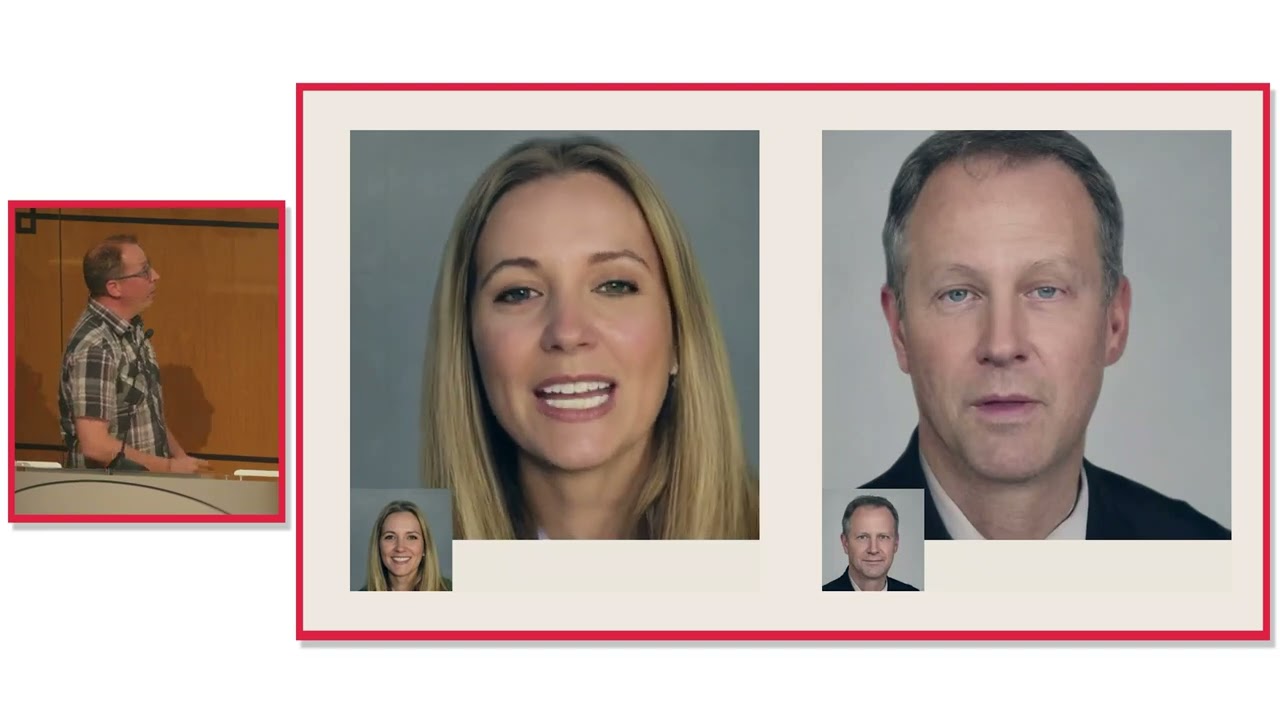
  • [03:14] The Future: AI Avatars and Preserving History Looking ahead, this massive dataset could be used to create composite historical characters or interactive avatars for museum settings—without the ethical risk of putting false words into a real historical figure's mouth. As the World Wars fade further into the past, AI is critical for preserving and connecting people with these first-hand accounts.

0views