-
The Narrow Scope of Recorded History: Most history recorded and displayed in museums represents a tiny fraction of the human experience, usually from a Western, middle-class perspective.
-
The "Storage Problem": Museums have physical limitations. They cannot accept every personal artifact, diary, or family photo, meaning millions of personal stories are left uncollected and uninterpreted.
-
AI's Reliance on Available Data: Large Language Models (LLMs) and computer vision AI are being used to catalog and understand museum collections (like the Imperial War Museum's 11 million images). However, if AI is only trained on this narrow slice of history, it will only tell a narrow, one-sided story.
-
The Democratization of History: Hodder argues that we should allow everyday people to contribute their family's war stories, memories, and photographs to help train AI.
-
The Importance of Humanity in AI: To make AI more intelligent and humans more human, we need to inject more nuanced, varied, and emotionally resonant human stories into the data that trains these systems.
-
[00:13] The "Class Limbo" of the Baby Boomer Generation Hodder opens with a humorous anecdote about his family transitioning from working-class to middle-class in the 1970s. He uses this to explain the feeling of not fully belonging in either world—a metaphor for how many people feel when they visit institutions like museums.
-
[02:24] The Alienating Nature of Museums He explains that museums can feel like "someone else's private club" for those who don't have a traditionally academic or middle-class background. Many people feel judged for not understanding the historical significance of the artifacts on display.
-
[04:12] Personal History vs. "Museum-Worthy" History Hodder discusses how personal family histories—like his grandmother's war stories or a name on a local memorial—often hold more meaning to individuals than traditional museum artifacts. However, these personal items are rarely considered "museum-worthy" and are almost never accepted into collections.
-
[05:03] The Physical Limitations of Museums Museums face a massive storage problem. They are full of unexamined boxes and artifacts, which is why they cannot accept the millions of personal diaries and photo albums that exist worldwide. Because they can only tell a fraction of the stories, the narrative becomes incredibly narrow.
-
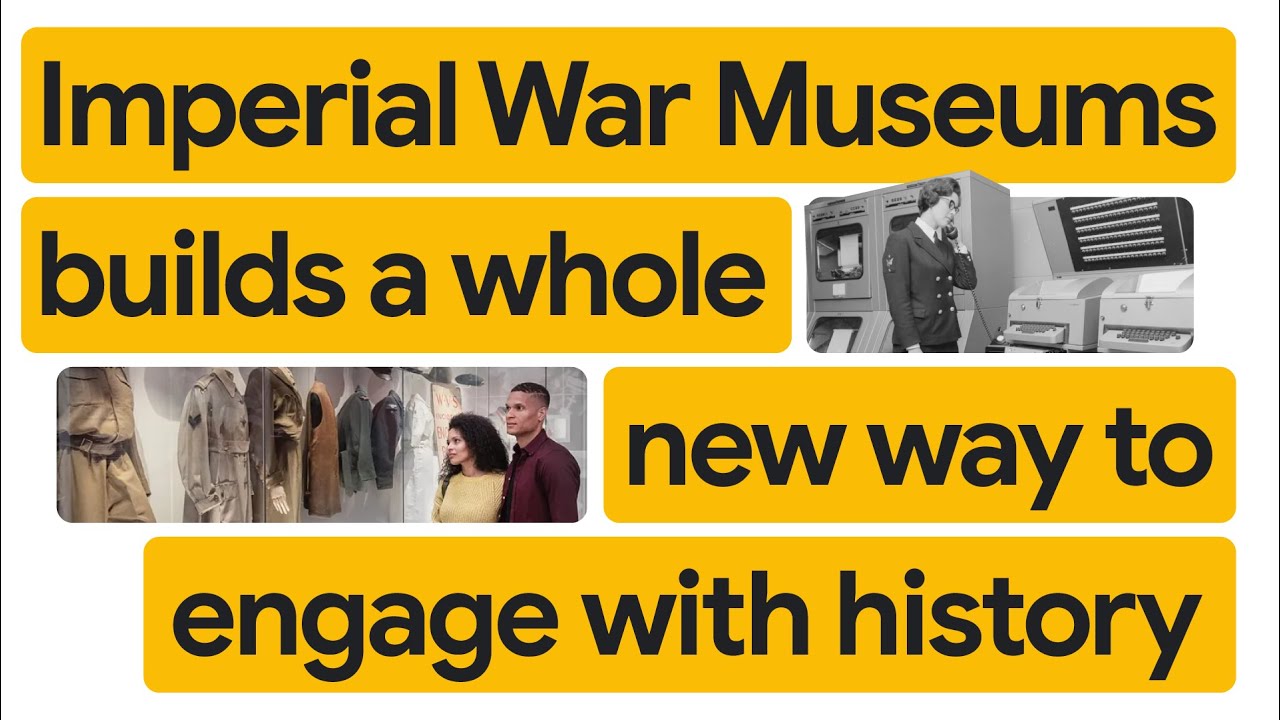
[06:14] How AI is Already Cataloging History Hodder explains that the Imperial War Museum uses computer vision and large language models to categorize its 11 million images. Over the past 8 years, AI has gone from being 80% sure an image contains an aircraft to identifying the exact mark of a Spitfire.
-
[07:08] The Danger of a Single Narrative in AI The biggest challenge is that AI is only trained on the data it is given. If historical collections only represent a white, Western, middle-class perspective, the AI will only reproduce that single narrative. The maximum number of sides to a conflict is almost infinite, but AI won't know that if it doesn't have access to the data.
-
[08:45] Democratizing History to Train Better AI Hodder's core proposal: What if people globally could contribute their personal war stories and family photos to train AI? This would allow AI to find new connections and tell a much broader, more accurate story of human history.
-
[09:05] Why Nuance is Critical for AI Large Language Models "love certainty," but war and human history are full of uncertainty and nuance. If we rely on AI to help us understand the causes and consequences of conflicts, the data it trains on must reflect the full, messy spectrum of human experience.
-
[10:41] The Human Element AI Cannot Replicate While AI can accelerate our understanding, humans are still required to bring relatability, joy, and humor to history. Creating a shared, inclusive sense of community is the true key to teaching both humans and AI about the past.